
By Linda Welzenbach Fries
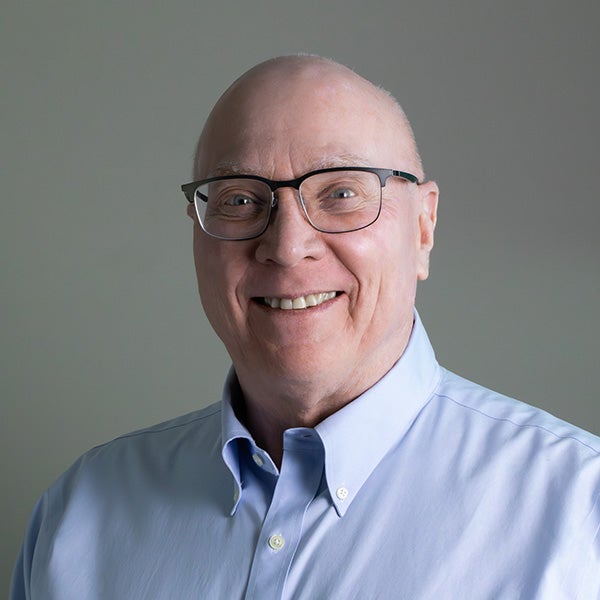
The EEPS community starts the fall semester less one of the most influential geophysicists of the past half-century. The Carey Croneis Professor of Earth, Environmental or Planetary Sciences, Alan Levander, has retired from Rice. Yet from his new home in the Pacific Northwest’s most active seismic zone, Alan is inspiring the next generation to pursue science.
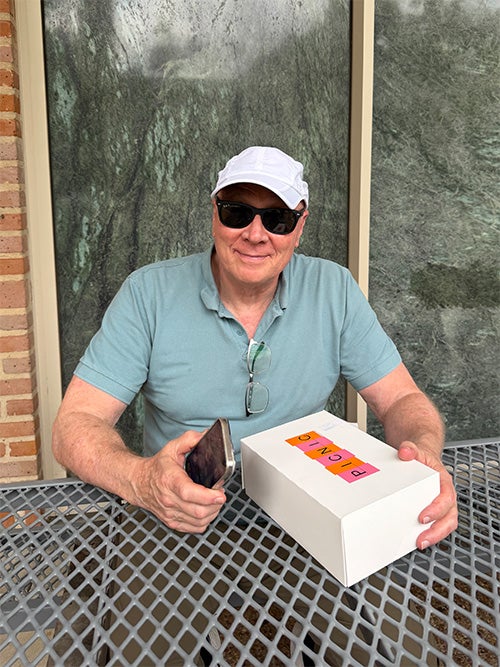
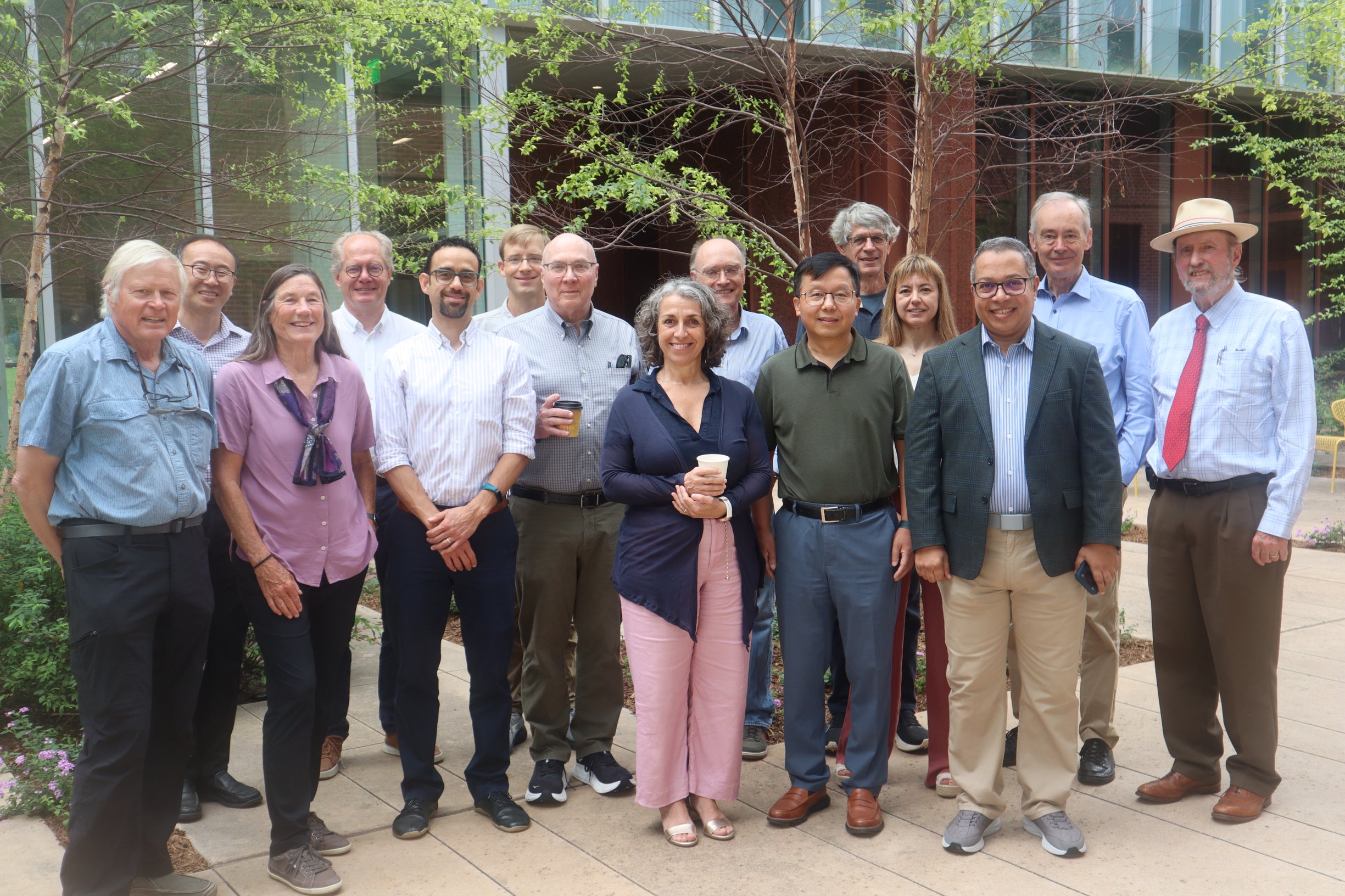
On April 25, 2026, a symposium was held to celebrate the retirement of Dr. Alan Levander, the Carey Croneis Professor of Earth, Environmental or Planetary Sciences at Rice University. The event brought together decades of former students and colleagues to honor a man whose work helped do for the North American continent what the Hubble Space Telescope did for the stars: it made the invisible, visible.
From the remote, militarized peaks of the Soviet-era Himalayas, the cutting-edge digital frontiers of the USArray, and beyond to the Moon and Mars, Levander’s career is a narrative of relentless curiosity that advanced the field of structural seismology.
The Early Years: From the South to the Soviet Union
Alan Levander’s journey began in South Carolina, where he completed his bachelor’s degree in geology, specializing in seismology with Pradeep Talwani, younger brother of EEPS Professor Manik Talwani. Following graduation from USC, he moved west to Stanford University for graduate studies during which he worked as a summer intern in the research labs of Shell Oil Company, Inc. and Gulf Oil Corporation. As a result, he developed a taste for well-funded projects that benefited from his numerical modelling skills. He continued as a consultant for Gulf Research and Development (R&D) during his final year of graduate school. It was during his early time at Stanford that he first tasted the reality of international fieldwork, serving as a geophysicist for the U.S. Geological Survey (USGS).
In 1977 following his first year of graduate studies, during the era of detente, the USGS sent Alan to Tajikistan in the Soviet Union—a mission that was as much a political exercise in scientific exchange as it was a research project. Living on a walled military base in the Pamir Mountains, Levander found himself navigating a world of gray margarine for his bread (he was dismayed to discover that margarine in Russian is lard) and relentless social pressure to drink large quantities of vodka from water tumblers. "I have developed a real distaste for vodka as a consequence," Alan recalled of the mandatory social drinking that often accompanied the work.
The project was ultimately a logistical nightmare of maintaining radio-telemetered seismographs in the Himalayas which were only accessible by hiking or sporadic deployment by Russian army helicopter.
Yet the landscape offered wonders that offset illness and isolation. While waiting to be picked up by a Russian army helicopter at 12,500 feet, Alan spent a day hiking the Himalayas and witnessed a rare sight: "I saw two snow leopards from afar. They were stalking a herd of antelopes that was down slope. They were very cunning".
Scientifically, however, the trip was a lesson in the limitations of the era. "After one summer, I said, there's no way that I can do this... the project was too distant to make rapid progress. USGS support for the project going forward was uncertain," Alan noted. He returned to Stanford to focus on a PhD project that would allow him more control and scientific innovation.
Foundations at Rice and the Vision of USArray
Alan’s transition into academia was extended by his intermittent industry position at Gulf R&D, an experience that that he described as “…a great experience. I would have stayed there my whole life, but they closed the lab in Pittsburgh and transferred everyone to Houston.” After finishing his Ph.D. at Stanford and following several years of consulting work with Gulf, he joined Rice University in 1984.
Over the next 42 years, working with his Rice seismology colleagues—Ross Hill, Bill Symes (in applied math), Dale Sawyer, Colin Zelt, Fenglin Niu, and most recently Jonathan Ajo-Franklin and Brandon Schmandt—he would help transform the Rice seismology program into one of the most competitive in the world.
The crowning achievement of Alan’s career and perhaps the most significant advancement in 21st-century geophysics was the USArray project. Launched in 2004, USArray was an unprecedented effort to deploy a "transportable array" of 400 high-quality, broadband seismographs across the United States in a rolling grid.
Alan was instrumental in the project’s promotion, funding and oversight. The goal was to create comprehensive, high-resolution "tomographic" and scattered wave images of the Earth’s interior beneath North America. The data collected by USArray allowed geoscientists to see structures they had never seen before, including "lithospheric dripping"—where the dense base of the Earth's crust and upper mantle exceeds the density of the mantle underneath and begins to sink like honey into the asthenosphere. This work advanced not just the understanding of North American tectonics, but the very methods of seismic tomography and interferometry.
The importance of mentorship in the "Small World" of geophysics
Throughout his tenure, Alan maintained that the success of a department was measured by the "passion" and motivation of its students and post-docs. He oversaw a diverse group of protégés who went on to lead the academic field, including Professors Anne Meltzer at Lehigh, Johan Robertson at ETH Zurich, Klaus Holliger at the University of Lausanne, Beatrice Magnani, at SMU, Max Bezada at the University of Minnesota, Igor Morozov at the University of Saskatchewan, and Eric Kiser at the University of Arizona. Of equal significance a larger number of students went into industry.
In the classroom, Alan’s favorite courses to teach were ‘Signal Processing’ and ‘Earth and Planetary Science’, subjects he approached with a student’s humility. "Every time I teach them, they are different because I've learned more about the subject," he said. "The more you do that, the more there is to know". This curiosity led him to contribute to extraterrestrial geophysics, including analyzing seismic data from the InSight mission to Mars and ongoing research into the lunar crust and core using seismic data from the Apollo missions.
Retirement: Bringing the Earth’s interior to the classroom
As Alan retires to the Pacific Northwest, he hopes his work is far from finished. He continues to conduct research on the active-source seismic data from Mount St. Helens, a project called iMUSH, that utilized nearly 6,000 seismic instruments to image the volcanic plumbing system, revealing a multi-layered composite structure with 48 cubic kilometers of melt. The geophysics of Puget Sound is a new interest.
Perhaps his most personal retirement goal is the establishment of a "Raspberry Shake" network in local schools. These are affordable, high-quality seismographs that provide students with hands-on seismology experience. "I mentioned placing seismic instruments in the schools to the superintendents of the Peninsula and Rainier School Districts, both of whom showed interest," he shared, highlighting his desire to inspire the next generation of school children to pursue science. Three seismographs are now running in the Peninsula district schools, and another is in his backyard.
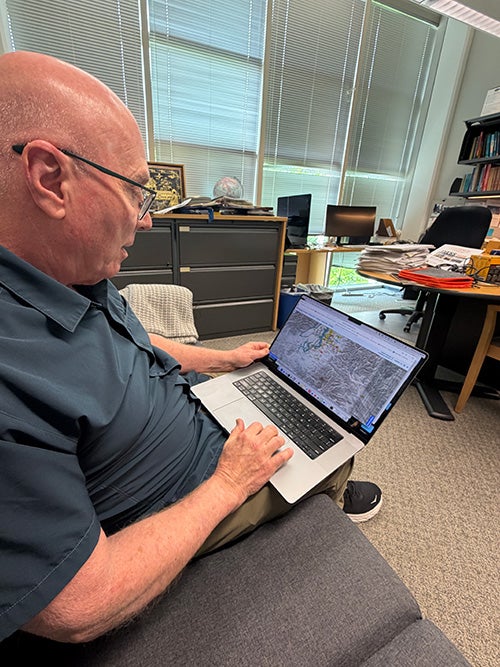
Even in his final faculty meetings, Alan’s commentary on the nature of academic life shows his appreciation of the challenges young faculty face. Commenting to me on the arrival of AI and the ever-increasing demands it and universities place on professors, he shared this: "Faculty responsibilities always increase, just like entropy... The ultimate increase is the heat death of the university".
Alan Levander retires as a Carey Croneis Professor, Fellow of the AGU and GSA, and a recipient of the 2007 George P. Woollard Award, and the Alexander Von Humblodt Research prize, but his true legacy remains etched in the seismic maps of the North American continent and beyond, and the accomplishments of the seismologists he mentored. He leaves behind a field that is no longer looking at the Earth through a keyhole, but through a wide-angle lens he helped build.