
By Linda Welzenbach Fries
Rice University and its institutional partners across the Texas Medical Center have officially launched the Center for Climate and Environmental Health (CCEH). Designed to translate complex meteorological and environmental data into actionable health research, public communication, and policy interventions, the center establishes a collaborative framework between higher education, health systems, and civic organizations.
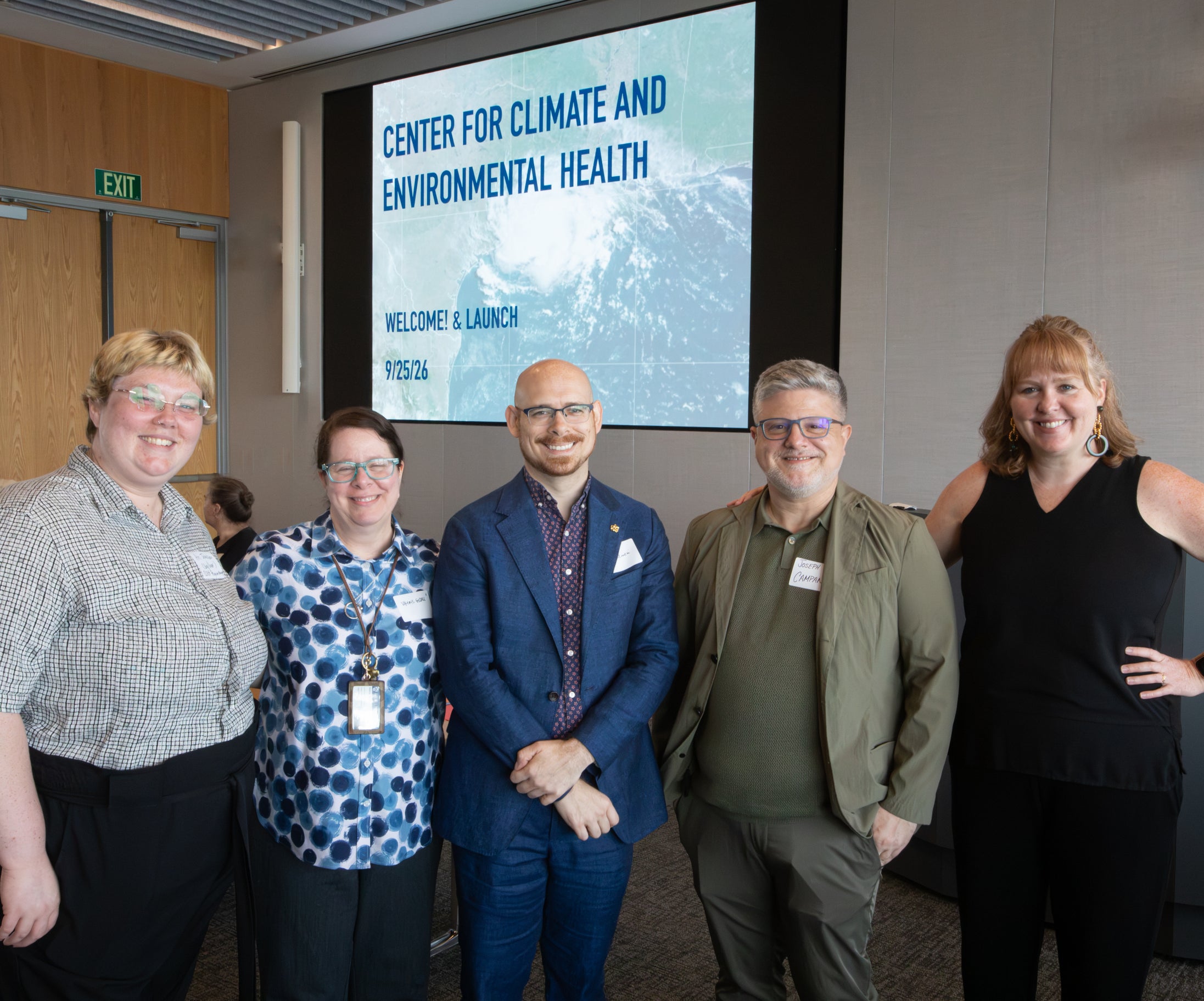
Rice University faculty, researchers, and steering committee members gathered on the last Friday of September for the official launch of the Center for Climate and Environmental Health (CCEH). The event introduced the center's leadership, multidisciplinary steering committee, and flagship initiative, FORECAST; a first of its kind five-year, $10 million Burroughs Wellcome Fund grant shared with Baylor College of Medicine and UTHealth Houston.
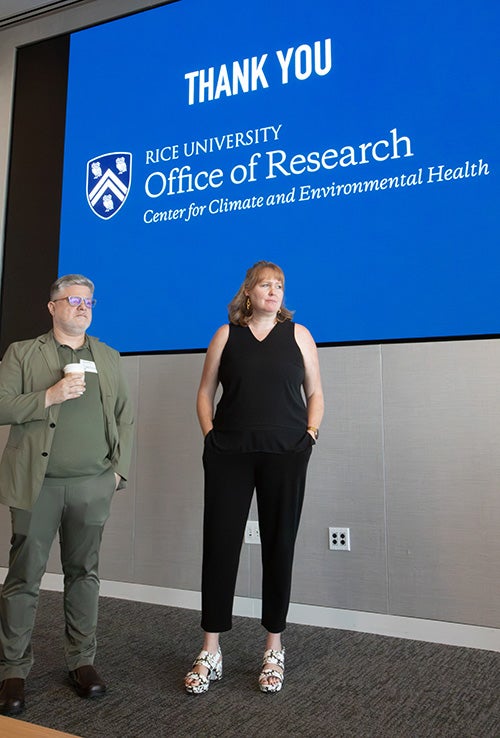
Directors Sylvia Dee, associate professor of Earth, environmental, and planetary sciences, and Center for Environmental Studies director Joseph Campana opened the presentation by highlighting Texas's critical role in environmental health research.
"Climate change is already impacting Texas in many ways," Dee said, “with significant impacts on human health. Texas provides a unique opportunity to study those impacts. In fact, I would make the argument that Texas is ground zero for environmental impacts on health."
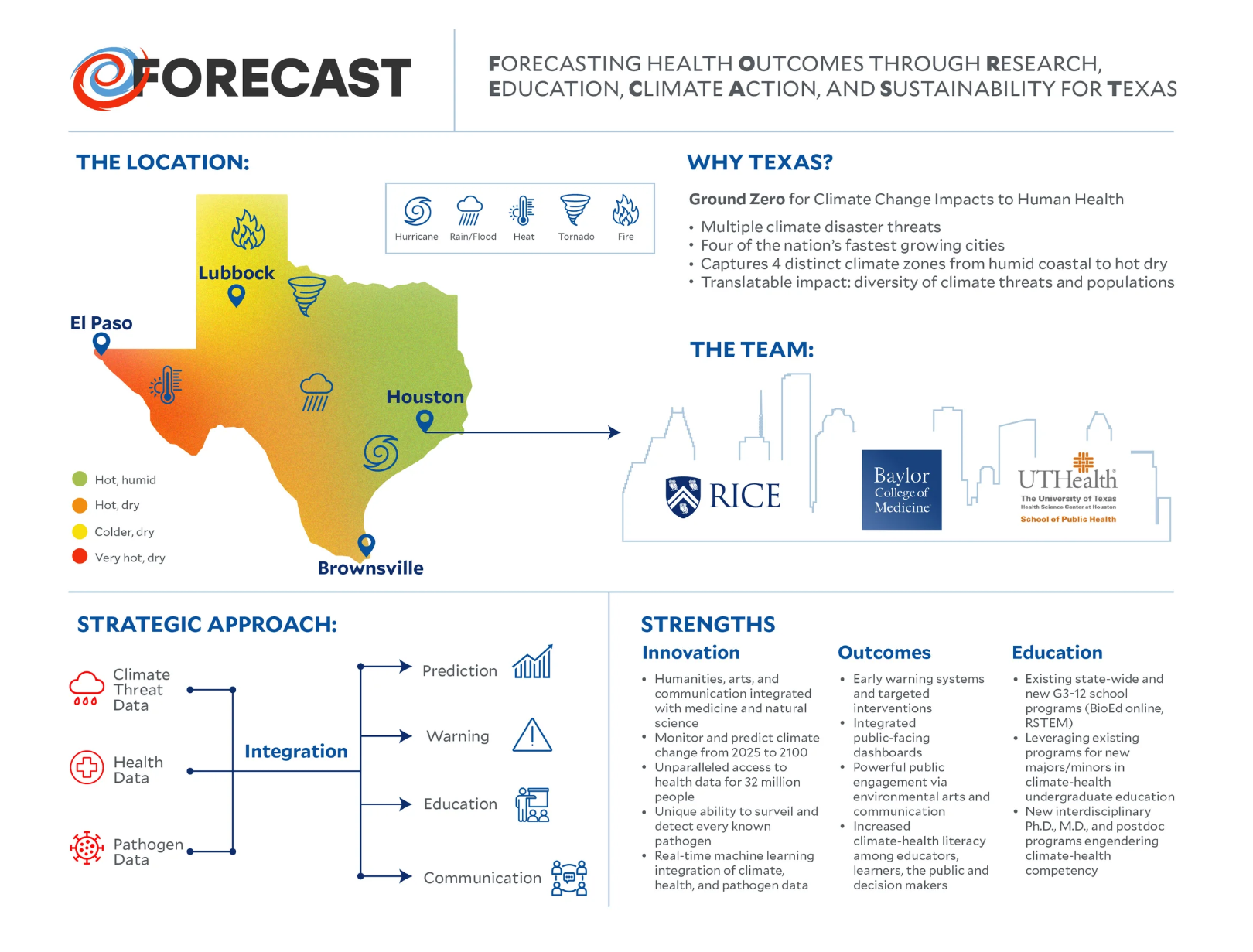
Dee noted that Texas contains four distinct climate zones, diverse populations, and four of the nation's fastest-growing cities, making it an ideal model for national and global health solutions.
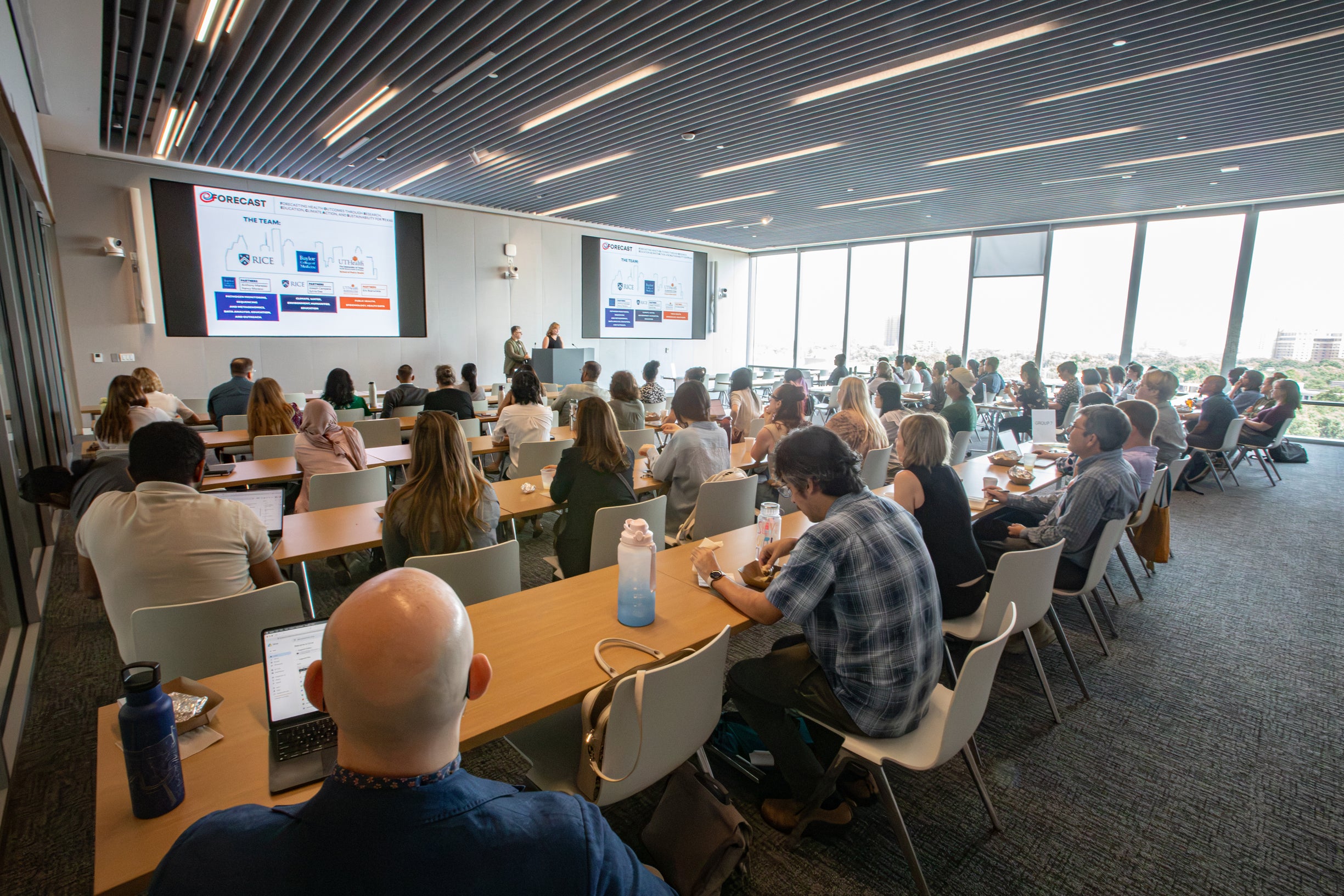
The FORECAST project—Forecasting Health Outcomes through Research, Education, Climate Action, and Sustainability for Texas—combines climate data with pathogen surveillance from Baylor, wastewater sampling, and comprehensive hospital records from UTHealth Houston and the Texas Medical Center.
According to Dee and Campana, FORECAST directly addresses long-standing structural hurdles in research funding.
Historically, climate and health initiatives have struggled to secure federal backing because grant structures operate in disciplinary silos, separating physical climate sciences from clinical medicine and epidemiology. Foundations and federal agencies are increasingly recognizing that addressing environmental health requires pairing major hospital systems and medical schools with research universities anchored in strong geosciences and humanities programs.
This cross-institutional model proved compelling to reviewers during the national selection process. FORECAST was chosen as the sole recipient of 162 applications submitted by universities and healthcare systems across all 50 states.
"The Burroughs Wellcome Fund put out this call nationally," noted Rice Foundation Relations director Ted Walker, highlighting the grant’s selectivity. "Over all the universities and hospital systems that submitted their ideas, this team competed through multiple rounds to win the award."
What distinguishes CCEH from standard academic research centers is its emphasis on intervention, communication, and translational application rather than purely observational studies.
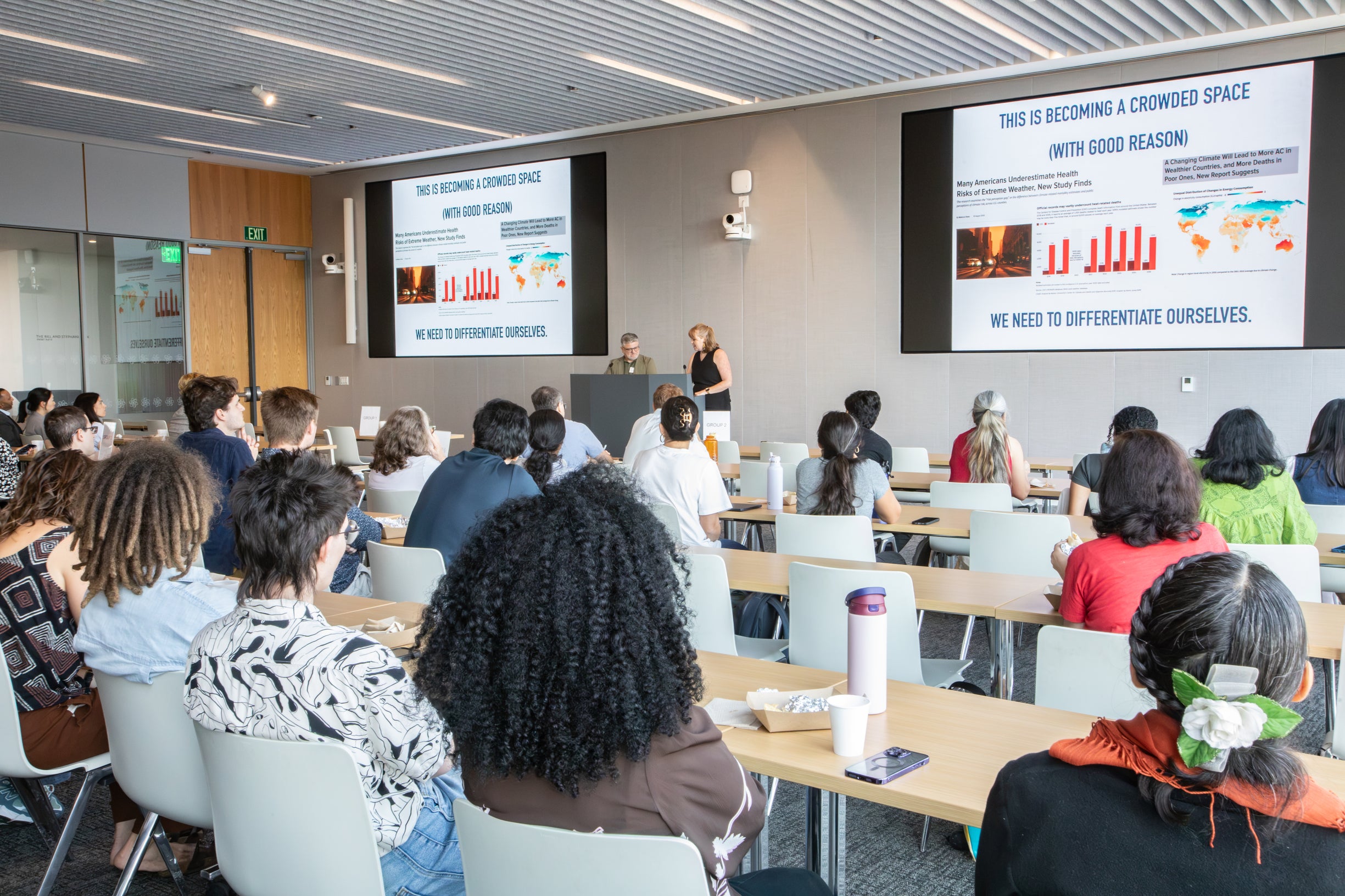
Rather than stopping at climate projections, FORECAST will combine public climate data from agencies like NOAA and NASA with pathogen tracking from Baylor, statewide wastewater monitoring from UTHealth, and clinical records from the Texas Medical Center.
By integrating these streams through predictive modeling and machine learning, CCEH plans to build real-time public dashboards and early warning systems. "This [area] is becoming a really crowded space," says Dee. "We already know heat and poor air quality impact health. What we intend to focus our efforts on are solutions, intervention testing, education, and policy.”
The grant also mandates deep integration with the humanities and social sciences to foster trust and literacy.
"Burroughs Wellcome had plenty of language in the call requiring a multidisciplinary approach — very interested in the humanities, social sciences, and a wide sense of multidisciplinarity," Campana explained. "Education, outreach and communication, expertise we find in the humanities, are critical for a meaningful transition into impact. It is only through a humanities and STEM collaboration that we can analyze and build community trust in the data."
Institutional Impact and Academic Pipeline
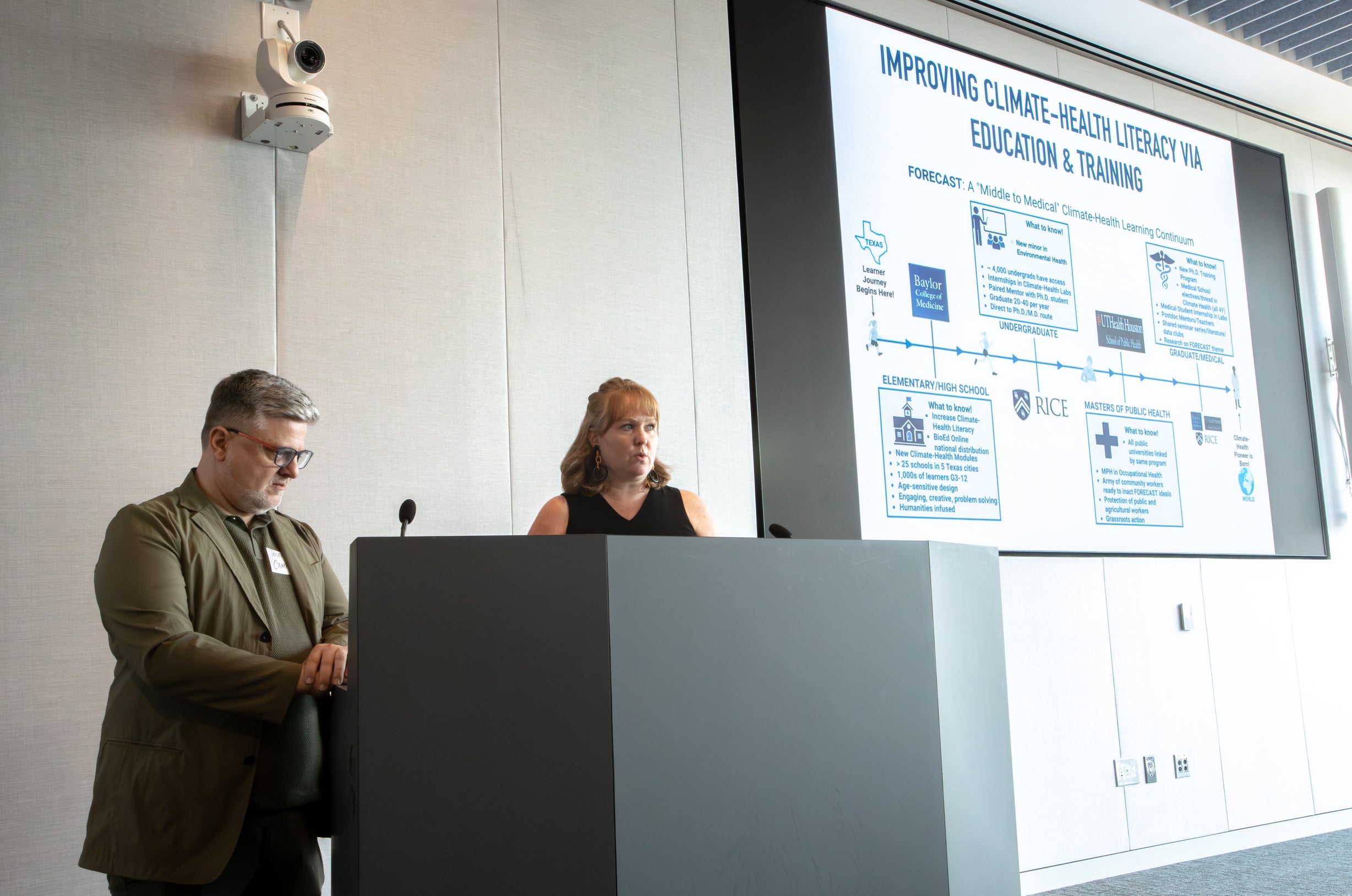
CCEH is structured to generate lasting institutional and regional impacts across research, training, and public literacy:
- Research Seed Grants: Rice will distribute annual seed grants of $25,000 to $50,000 to foster interdisciplinary faculty research.
- Fellowships and Trainee Cohorts: CCEH will support two postdoctoral positions, five to 10 graduate fellowships, and undergraduate internships annually, connected through peer-mentoring cohorts.
- Curricular Development: An environmental health minor is under administrative review, alongside a new course, Climate Change and Environmental Impacts on Human Health, planned for spring 2027.
- Community Partnerships: The center works directly with Harris County Public Health, the Houston Health Department, Girl Scouts of the USA, and Citizens’ Climate Lobby.
- K–12 Pipeline: The Climate Action and Resilience Education (CARE) initiative will develop climate-health curricula for high school educators across Texas.
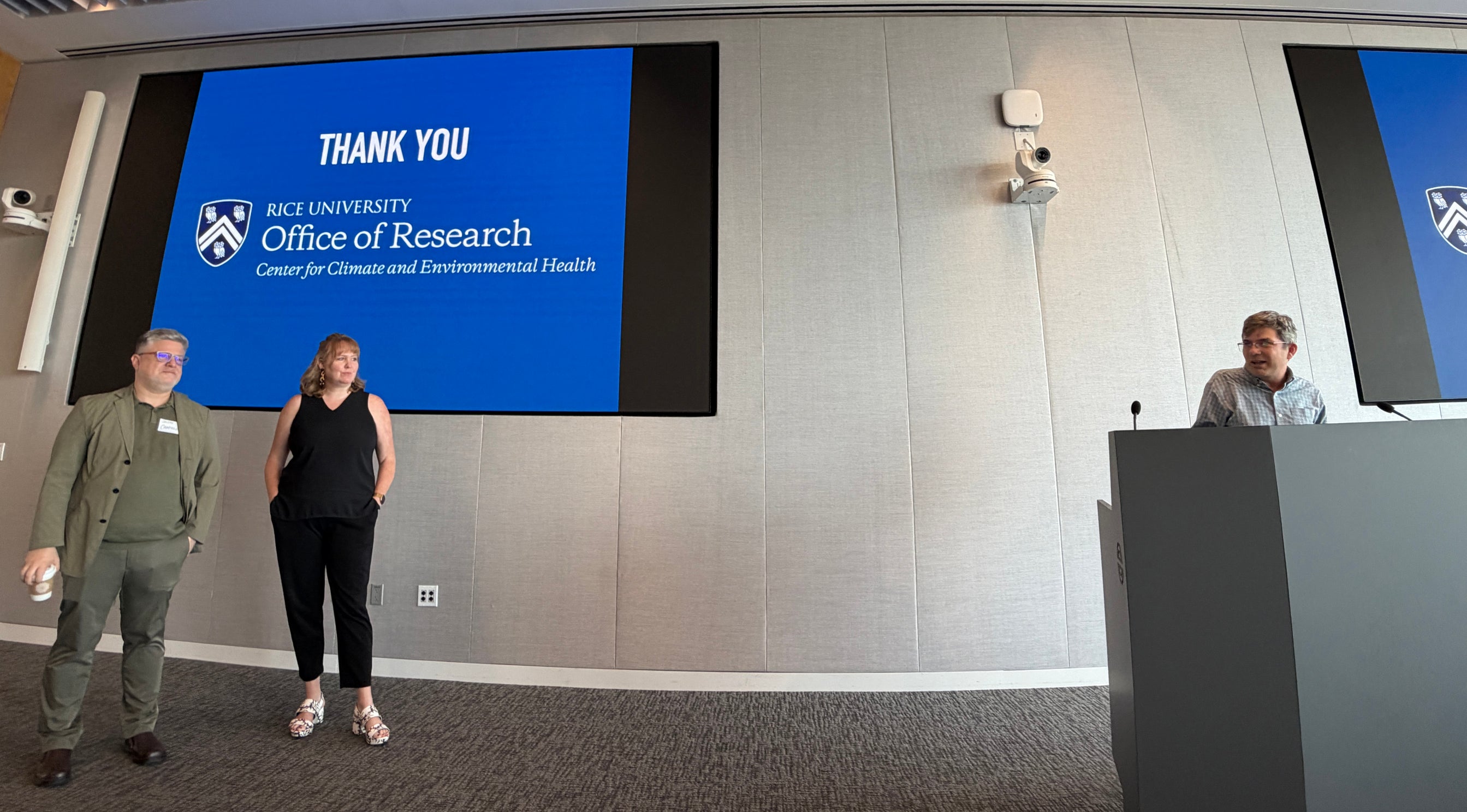
Highlighting the necessity of this interdisciplinary structure, Department of Earth, Environmental and Planetary Sciences Chair Jonathan Ajo-Franklin called the center a milestone for "translational Earth science," noting that connecting physical geoscience drivers directly to clinical public health outcomes is nearly impossible within a single academic department.
Dee’s final words illustrated the center's holistic mandate, describing a recent report on the spread of the New World screwworm. "To solve a problem like New World screwworm, how many different types of disciplines do you need?" Dee asked. "You need policy, pandemic expertise, epidemiology, climate, biodiversity, border migration, behavior, agriculture, and veterinary science."
Campana added that the center aims to balance real-time problem-solving with visionary long-term planning. "We're not just reacting... we're also trying to imagine different and better futures," Campana said.
By combining data science, clinical medicine, environmental humanities, and civic engagement, CCEH aims to establish a scalable framework in Texas that can ultimately inform climate-health strategies across the Gulf Coast and beyond.