
By Linda Welzenbach Fries
The Rice Science Olympiad, now celebrating its 10th anniversary, is a STEM competition event spearheaded by dedicated undergraduate students and supportive Rice faculty. Recently, the minds behind this year’s regional tournament sat down to discuss the evolution of the event, the rigorous preparation involved, and the driving passion that makes it all possible.
What is the Rice Science Olympiad?
The Rice Science Olympiad is a sprawling regional tournament that brings together high school students from across the state to compete in a variety of STEM-related events. This year, the competition hosted 20 teams representing 19 unique high schools from Houston, Sugar Land, and Katy.
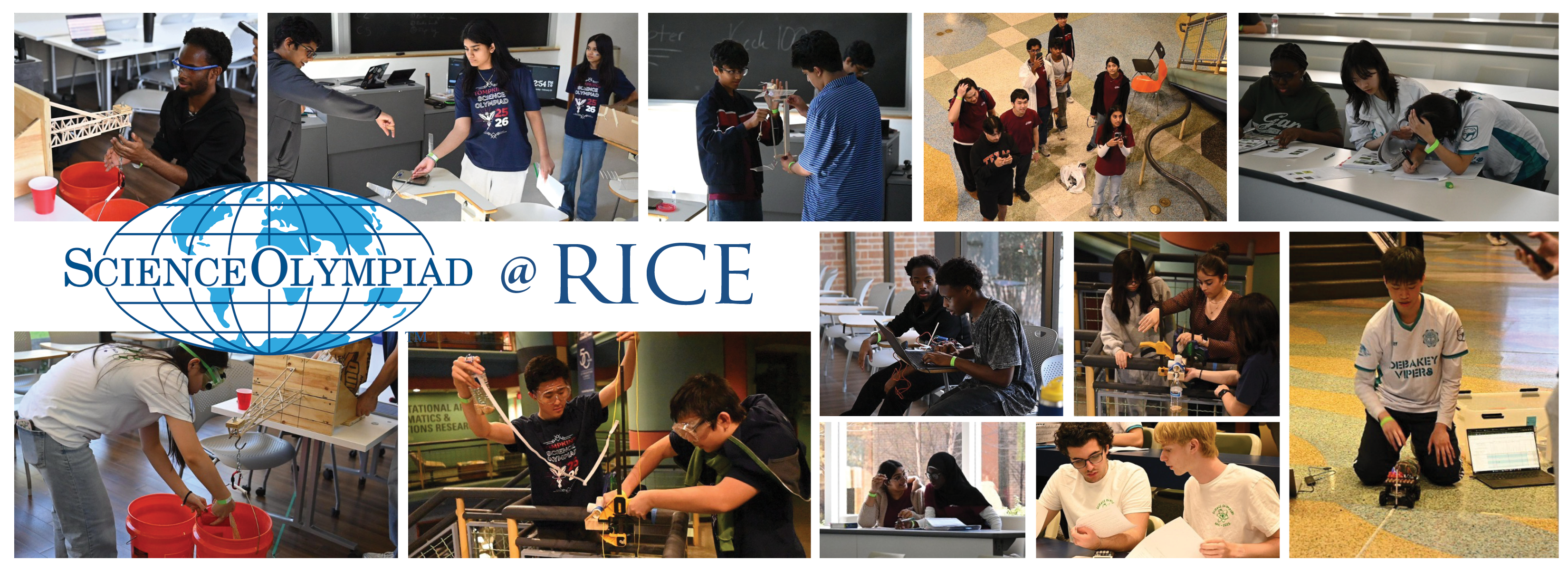
The one-day tournament features up to 28 different STEM events. Among these, 23 are SOAA official events, while 5 are "trial events" introduced by state directors to test new concepts. These events span an impressive array of disciplines, including everything from "Disease Detectives" and "Microbe Mission" to unique fields like rocket science and computer architecture.
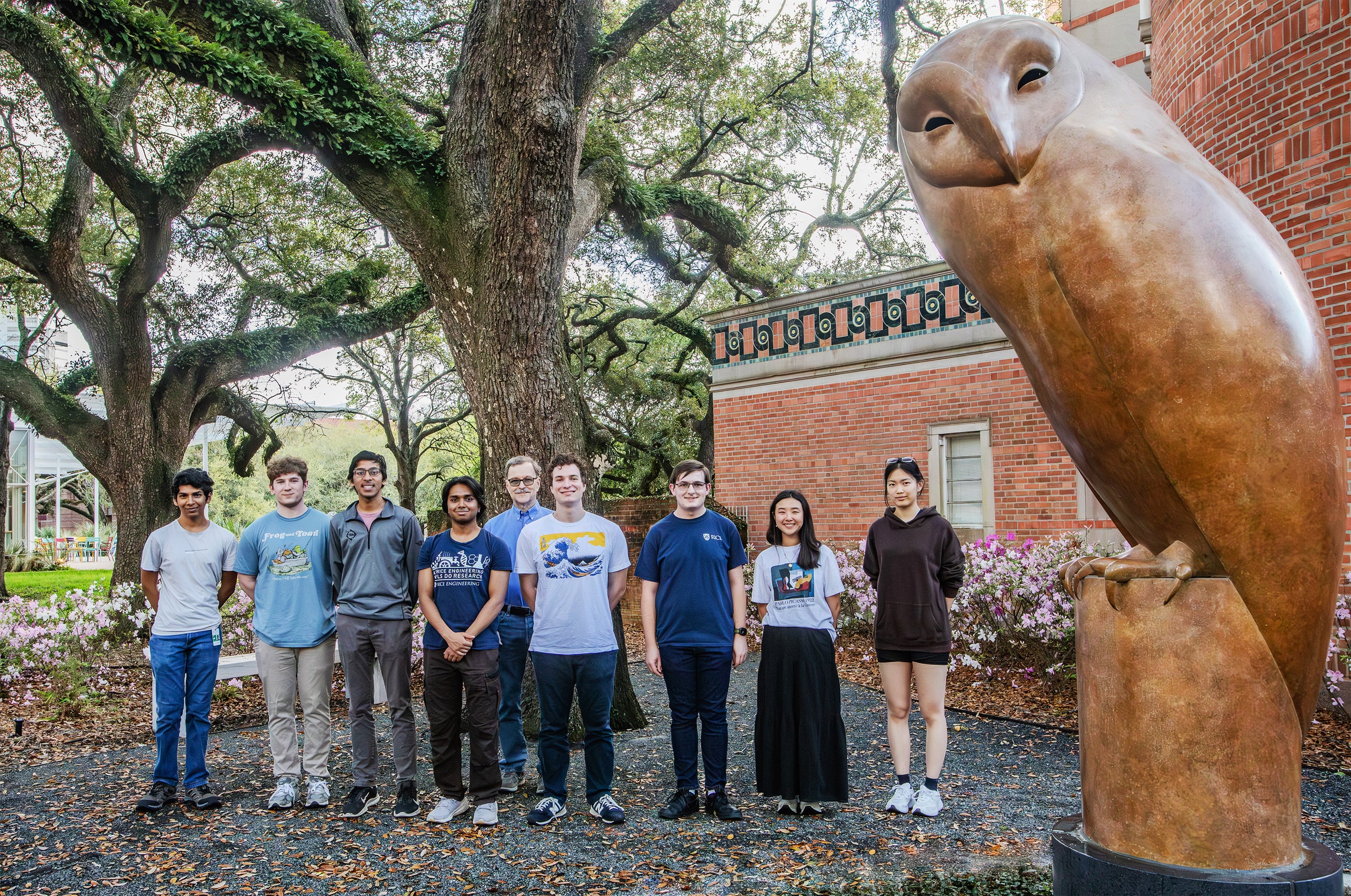
The scale of the tournament requires campus-wide coordination. Events are hosted in numerous classrooms and laboratories across the university, including the Kraft building, the Humanities building, Anderson Biological Laboratories (ABL), and Duncan Hall, where the awards ceremony is held. The event concludes with a keynote address by Dr. Richard Gordon, EEPS long-standing faculty sponsor.
Meet the Architects: Sarah Guo and Jack Krause
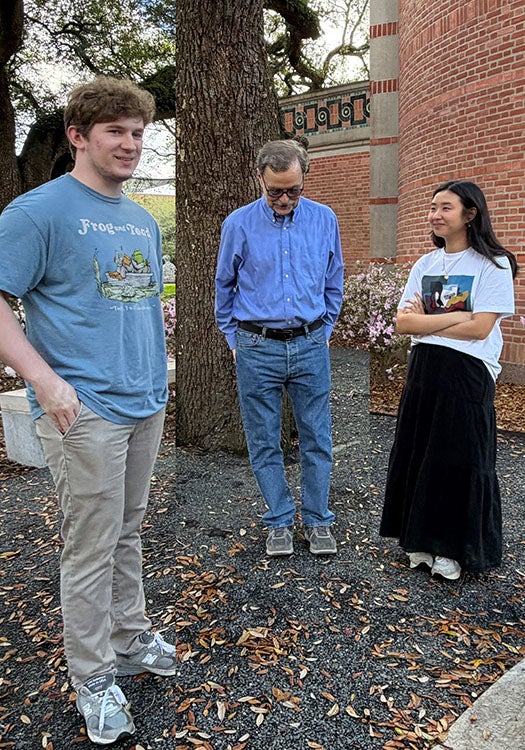
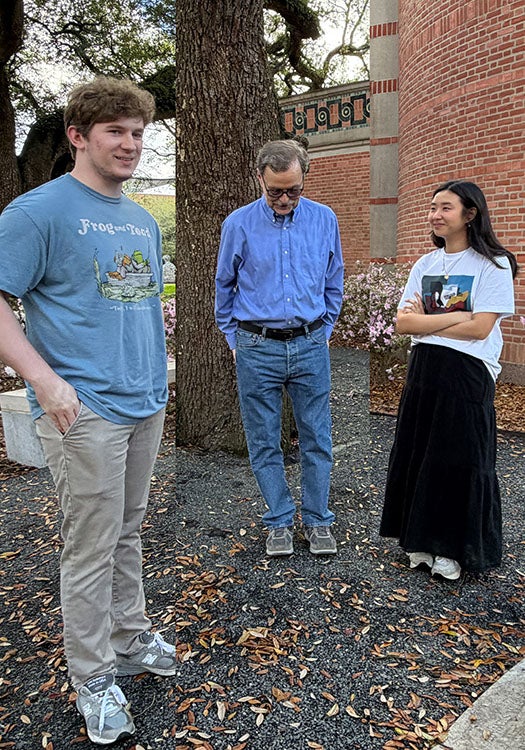
The heavy lifting of organizing the tournament falls largely on the shoulders of the Rice Science Olympiad Alumni Chapter, specifically its student co-directors. In a recent interview with EEPS science writer Linda Fries, two of these key leaders—Sarah Guo and Jack Krause—shared their insights.
Sarah Guo is a senior from Duncan College studying Health Sciences within the Department of Kinesiology. Her journey with Science Olympiad began long before college. She competed throughout high school and attended Rice's virtual regional tournament during the COVID-19 pandemic. This early exposure motivated her to join the alumni association when she matriculated at Rice. Over her four years with the organization, Guo has worn many hats: starting as a "Disease Detectives" test writer her freshman year, moving up to website manager and outreach coordinator, and finally serving as co-director for the past two years. As co-director, she focused heavily on logistical tournament organization and working directly with the participating high schools.
Jack Krause is a senior from Hanszen College studying Biosciences. Like Guo, Krause has a long history with the competition, having participated throughout middle and high school. He discovered the alumni group at a club fair during his freshman year. Krause also began as a test writer, crafting exams for the microbiology and cell biology events. He then transitioned into event supervising before stepping into the co-director role this year alongside Guo. While Guo managed external communications with schools, Krause focused on managing the internal army of volunteers and sourcing physical materials for the building events.
The Art and Rigor of Competition Design
One of the unique aspects of the Science Olympiad is that the examinations are student-written. While general guidelines are released annually by the national organization, the specific content and format of the exams are left entirely to the event supervisors and managers.
This flexibility requires immense effort and creativity from the Rice undergraduates. Writing a high-quality test is a demanding process. For instance, an early draft of the "Disease Detectives" exam ran up to 40 pages long, heavily featuring essay questions. Krause noted that such tests have to be heavily edited down to be feasible for both the competitors to finish within the 50-minute time block and for the volunteers to grade efficiently. Usually, tests are developed by small teams of no more than three people to maintain focus and divide the heavy workload.
The students also take pride in pushing boundaries. Beyond standard AP subjects, the tests delve into highly specialized fields. Krause highlighted an event called "Designer Genes," which covers advanced topics like molecular biology and genetic engineering—subjects Krause himself studied at Rice.
Why They Do It: The Value of Science Olympiad
Organizing an event of this magnitude is a grueling volunteer effort, yet the co-directors remain deeply passionate about the mission. For Krause, the value lies in expanding the horizons of young scientists.
"I think it exposes high schoolers to a lot of advanced fields that they might not otherwise be exposed to," Krause explained. "They get to study for it. They're learning a lot for these specific events. And if we create challenging tests that adhere closely to the national guidelines, the hard work the students have put in to prepare for them truly pays off on competition day."
As a former competitor, Krause finds the experience profoundly rewarding. It allows him to create tests that he knows the students will ultimately enjoy, even if they are challenging in the moment.
"It's pretty exhilarating to get recognized for a placement or a medal after you work so hard to prepare and then do the test," Krause added, recalling the sheer nerves and excitement of standing on the podium.
Guo emphasized the community-building aspect of the Olympiad. Because all events are team-based—with students competing in pairs or groups of three—it fosters deep connections.
"You create such strong camaraderie throughout the year, and that's why we have an alumni association," Guo said. "People enjoy the event, they want to come back, and they want to continue doing it".
Giving Back: EEPS faculty sponsor Richard Gordon on his role in Science Olympiad
EEPS professor Richard Gordon became involved with Rice Science Olympiad in 2016 when they asked him to write a test and proctor the exam as well. He became the faculty sponsor in 2019 and has been supporting the event every year since (including his sabbatical year).
While he sometimes helps to write or grade exams, his primary role is to be present and supportive during the tournament and at the evening awards ceremony. “The student leaders of Rice SOAA absolutely keep everything organized and do the heavy lifting. They very much deserve accolades for what they have accomplished and for the fantastic service they do in reaching out to so many high school students/future scientists (and in acquainting these students with Rice).”
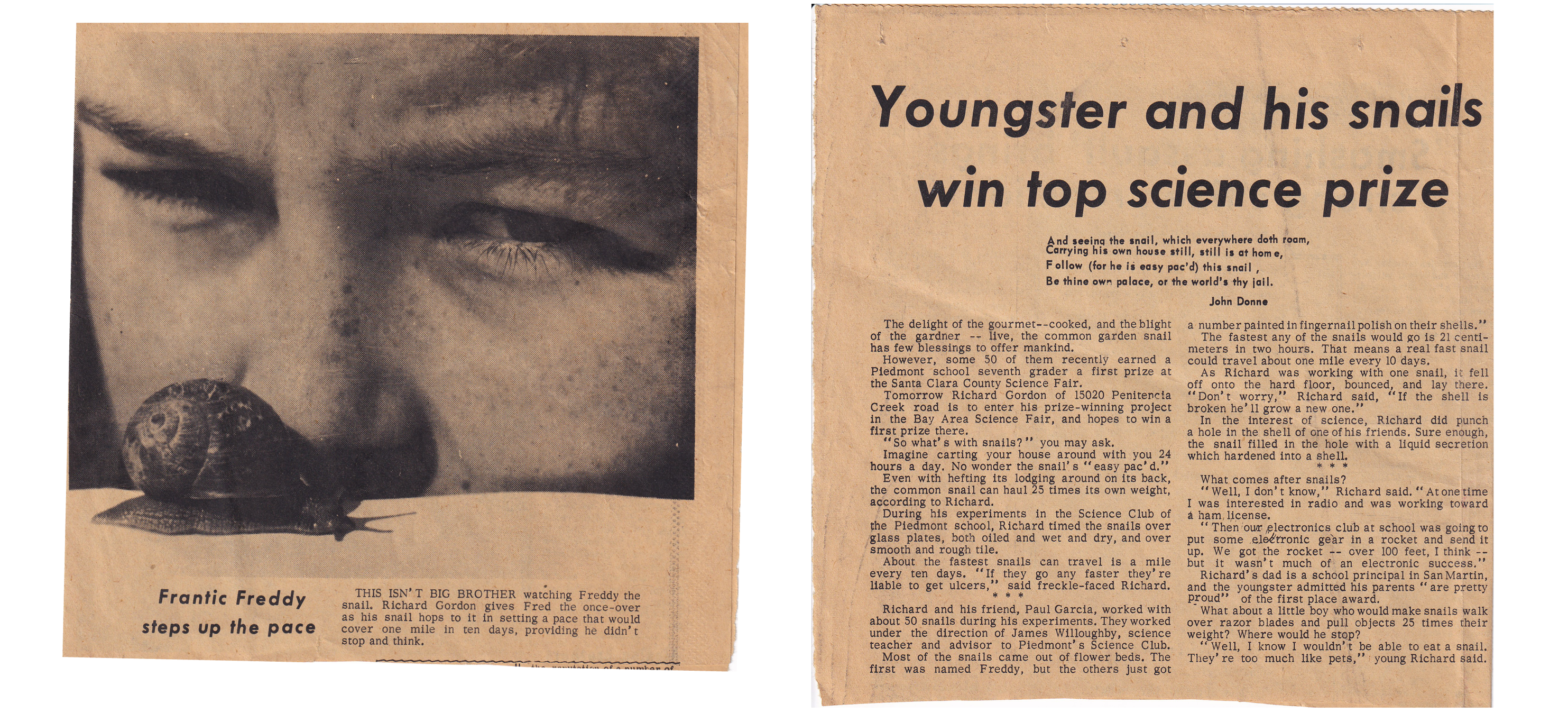
Gordon goes on to say that Science Olympiad didn't exist when he was a student, but science fairs did--and they were an important part of how he came to be a scientist today. “Someone organized, judged, raised money, and did all the little things to make it possible for 12-year-old me to enter the science fair (not to mention my middle-school science club advisor). Being the sponsor of the Science Olympiad allows me--in a small way--to give back,” says Gordon.
Looking to the Future
As Guo and Krause prepare to graduate and pass the baton, the legacy of the Rice Science Olympiad appears to be in safe hands. Krause noted that several promising freshmen and sophomores have already demonstrated the leadership and responsibility needed to take over. Supported by enduring figures like Dr. Richard Gordon, who has shepherded the program for a decade, the organization is poised to continue inspiring the next generation of scientists.