
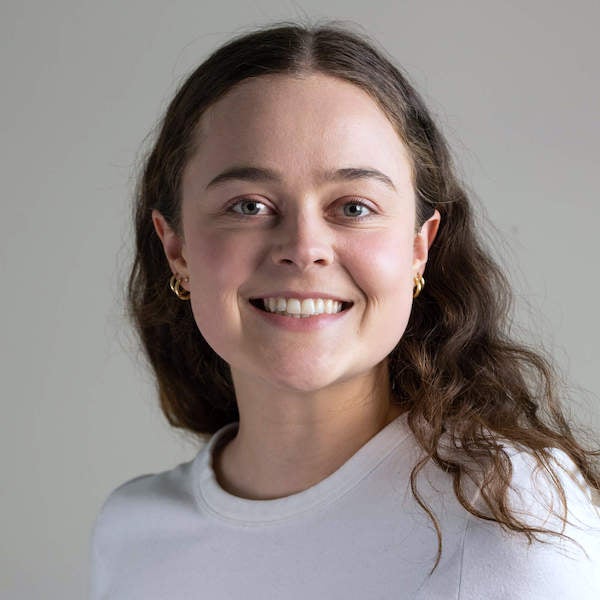
Morgan Underwood talks about her experience with writing for The Conversation, a publication that makes academic research accessible, emphasizing the importance of plain language communication and the value of opportunities provided at Rice through the Center of Teaching Excellence.
Pitch Perfect
I recently wrote an article for The Conversation U.S. (TCUS), a nonprofit news outlet that pairs researchers with professional editors to make expert knowledge accessible to the public. Their writers are scholars who translate their work into plain, engaging language across fields like policy, science, health, economics, education, history, and ethics. Some pieces cover timely, evidence-based analyses of current events, like this article following the 2025 Nobel Peace Prize selection or this one reviewing the Supreme Court’s decision on December 5th, 2025, to review controversy over birthright citizenship. While others explain new research or write “explainers” of complex issues. Rice, along with many other reputable institutions, is a member and financial supporter of The Conversation, and has many faculty members who have contributed to the platform.
The Conversation’s mission is rooted in repairing trust between the public, the media, and experts. The organization was created in response to growing skepticism about journalism and academic research, aiming to amplify the voices of people who study the issues they write about. TCUS publishes all articles for free, distributing them at no charge to news organizations across the geographic and ideological spectrum, and is dedicated to transparency and credibility. This is evident in the way they recruit writers, who must provide proof of their research affiliation and expertise.
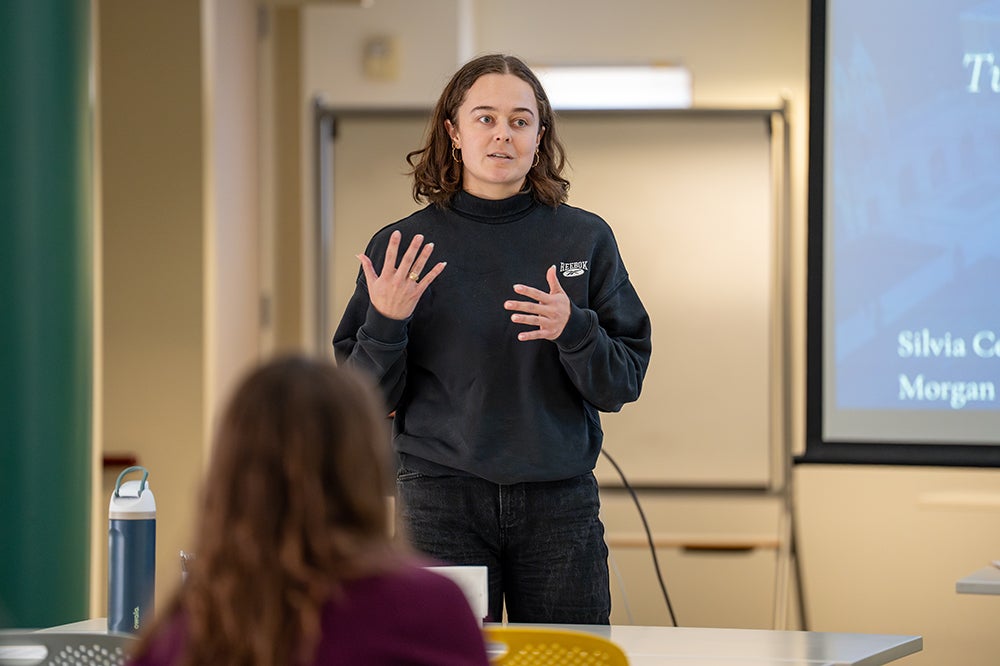
I learned about The Conversation through Rice’s Center for Teaching Excellence (CTE) back in August, when they were seeking graduate student volunteers to help host a workshop on writing article pitches to TCUS. In September, they connected me with a media specialist, Silvia Cernea Clark, who helped me shape my own pitch. We spent hours talking through my research and exploring different angles before settling on a piece that would introduce my work, lay out the current state of the field (and its big open questions), and look ahead to how things might change once a new telescope comes online in the 2030s.
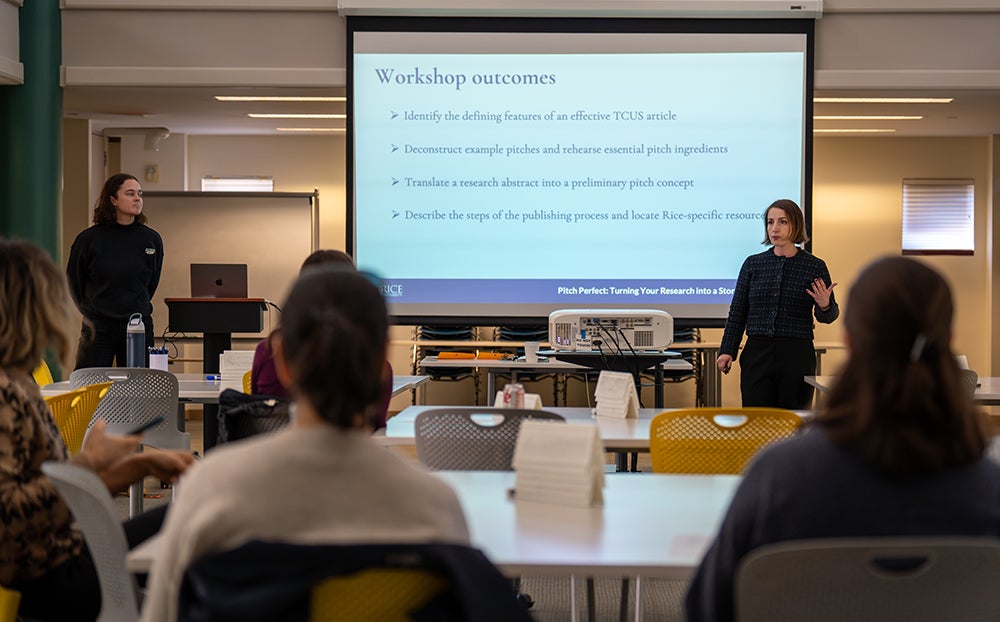
Silvia and I set a goal of submitting our pitch by October so that, if it was accepted, we’d have time to draft the article before the workshop. The hardest part of pitching (guide linked here) turned out to be distilling the key ideas of the piece into just 150 words. The shortest professional thing I’d ever written before was a 300-word conference abstract. Which meant I had half the space to outline my work, explain why it matters, and provide sufficient background context. That’s where Silvia made all the difference. She knew how to sift through my jargon, turn it into something digestible, and keep the focus on what really mattered. Working with her not only improved my writing and communication but also modeled what it means to be an effective science communicator.
In addition to condensing what’s basically my thesis research into 150 words, I also had to establish expertise, meaning I had to explain why I was qualified to write the article I pitched. If you are a student, being asked to provide “proof of expertise” is basically an invitation to spiral into impostor syndrome. I’m in my 5th year of my PhD, and at this point, I have written academic papers, defended my ideas to experts, and established myself in my field of study. Yet, there are still days I doubt myself and my work, something every student knows all too well. And this doubt intensifies when your work begins reaching a wide audience, becoming subject to further scrutiny by others.
It didn’t help that, as I searched for TCUS articles written in my research area, most were written by established, widely recognized, and respected researchers. I decided early on that there was no chance my pitch would be accepted but submitted one anyway. Mostly to follow the spirit of the workshop, I treated the experience like an experiment. This meant testing a hypothesis I didn’t expect to be proven, while collecting evidence to share with others in order that they may have a better probability of success.
To my surprise, my pitch was accepted! An editor emailed me the day after I submitted to say they wanted to move forward with the article. We talked article logistics over the phone, including word counts, the editing process, and timelines. The editor gave me a lot of independence in drafting the article, which ended up being exactly what I needed. I found the process flowed when I didn’t have to fight the words or structure and let my thoughts fall into place naturally.
Because the pitch focused on my own research, most of the 800-word limit for the article ended up going towards laying out proper context. I probably spent ~500 words on the background, ~200 on the state of my field and where my work fits, and ~100 on what’s coming next. After the final round of editing, the draft had ballooned to ~1100 words, if that’s any indication of the editor’s critique of my previous drafts. Most of her comments pointed out places I needed to unpack terms or clarify ideas. This looked like breaking down key Earth processes (i.e., how plates move, how carbon cycles through the planet over long timescales, and how that affects Earth’s surface temperature), and making clearer links between complex ideas (i.e., connecting Earth processes to exoplanet observation). Ultimately, her feedback was invaluable, not just for tightening the article but for improving my writing and communication overall.
We ended up with a piece that both my editor and I were really proud of. I felt a great sense of accomplishment (impostor syndrome included, nonetheless). This experience helped me see myself and my work in a new light. And working with skilled science communicators added an element of personality, clarity, and consideration to my writing that I didn’t have before.
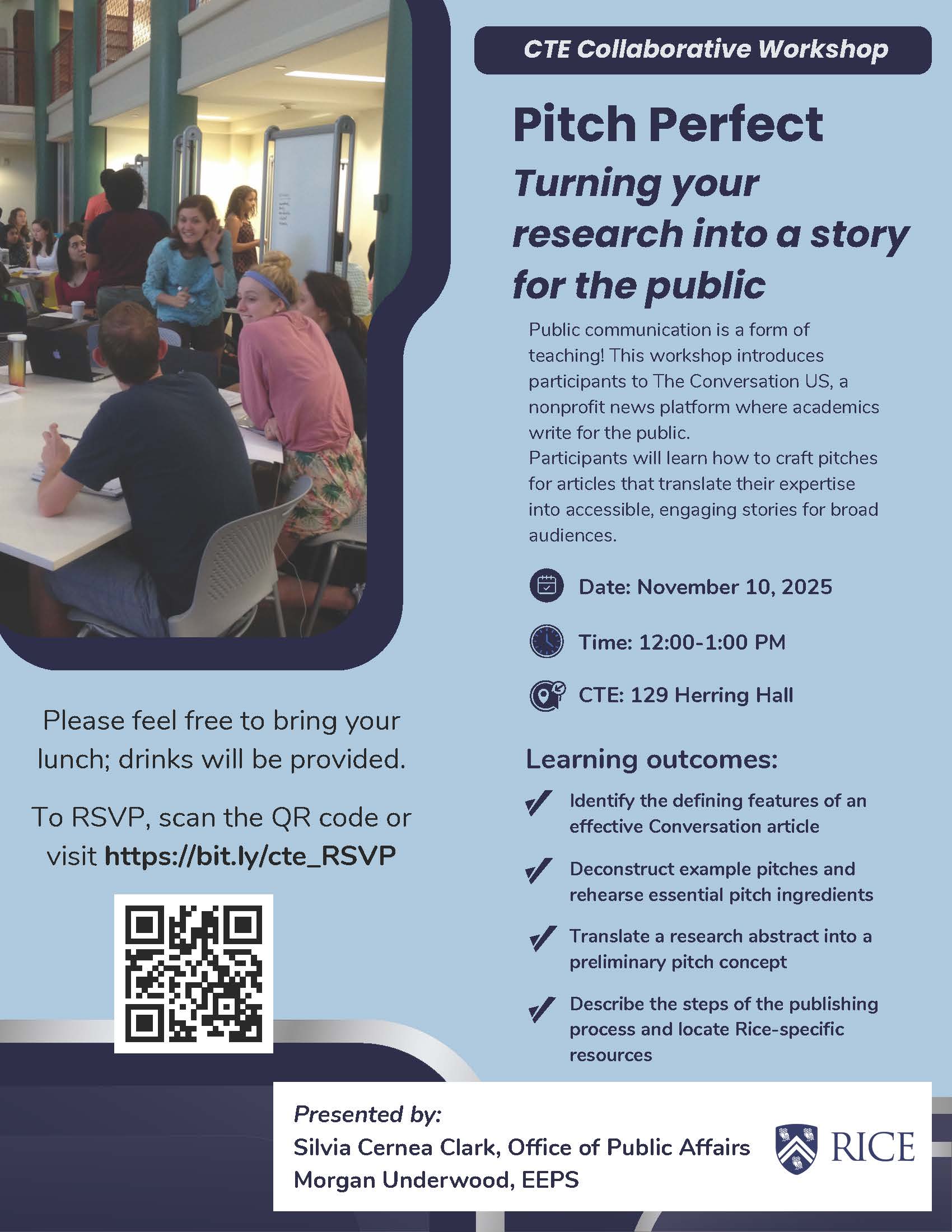 Our workshop took place in mid-November and had good turnout. We hope to make it a regular offering every semester, so if you are interested, keep an eye out for it next time!
TCUS also hosts quarterly zoom sessions called 'Pitch Like a Pro', where you can learn how to pitch and write for the outlet. The remote workshop includes an overview of TCUS, pitching best practices and a Q&A with editors. For more information and opportunities to make your own pitch, please contact Silvia Cernea Clark [ sc220 @ rice.edu], in Rice Public Affairs.
Morgan is in the 5th year of her Ph.D. in the Earth, Environmental & Planetary Sciences Department at Rice University. Her current research focuses on a forthcoming publication that proposes a new way to test existing theories about where potentially habitable planets are most likely to exist within solar systems, using incoming telescope data–provided a sufficiently large sample of planets is observed. In future work, she aims to incorporate observational uncertainties (like star interference, imperfect instruments, biased planet samples) and examine how they affect the amount of data required to evaluate prevailing theories about habitability in the galaxy. Morgan is passionate about science communication, education and policy, and after completing her PhD, she plans to pursue a career in either science policy or teaching.